
Products
Braided webbing
Flat Braid vs. Tubular Braid: A Comprehensive Analysis of Materials, Structures, and Industrial Applications
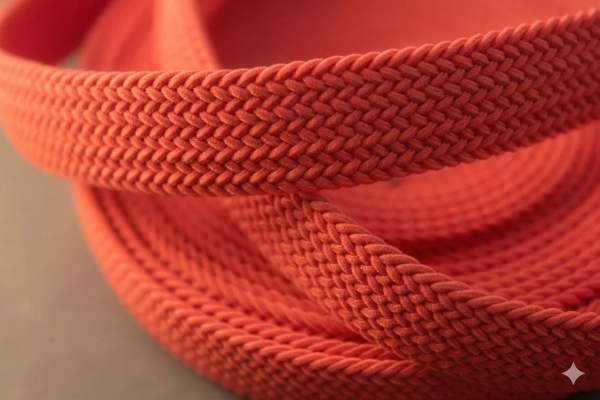
In the fields of industrial manufacturing and product design, selecting the correct braided structure is critical to a product's durability, flexibility, and protective capabilities. Flat Braid and Tubular Braid (also known as circular braiding) represent two core engineering processes. This article provides an in-depth comparison of these two braiding methods to help you select the most suitable material for your specific requirements.
What is Flat Braid?
Flat braiding involves interlacing three or more strands of yarn or wire into a flat, ribbon-like configuration. While the structure is similar to a traditional manual hair braid, industrial machinery allows for significantly higher precision and tensile strength.
Key Characteristics of Flat Braid:
-
High Surface Contact Area: The flat profile distributes pressure evenly, making it ideal for bundling or hoisting applications.
-
Low Profile & High Flexibility: Its thin cross-section allows for easy installation in tight spaces and facilitates secure stitching or fastening.
-
Superior Friction: The surface texture provides excellent grip, preventing slippage during use.
Common Applications: Copper ground straps (Flat Braid Earth Leads), shoelaces, outdoor gear webbing, and garment trimmings.
What is Tubular Braid?
Tubular braiding (also referred to as hollow braid or circular braid) involves weaving strands around a central axis to form a cylindrical shape. This structure can remain hollow or be braided directly over a cable, hose, or other core materials.
Key Characteristics of Tubular Braid:
-
Hollow Protective Function: Ideally suited for sleeving over cables and hoses, providing physical abrasion resistance and Electromagnetic Interference (EMI) shielding.
-
Expandability: The tubular structure features a unique "bellows" effect; the diameter expands when compressed and tightens when tensioned.
-
Structural Stability: Compared to flat textiles, tubular structures offer superior resistance to torsion and twisting.
Common Applications: Cable abrasion-resistant sleeving, hydraulic hose protection, parachute cord (Paracord), and medical catheter braiding.
.png)
Full product support
Products you might be interested in

Shopping bags
Reflective Materials
Bamboo Biodegradable Fiber Materials
Webbing & Tape

|
Contact ✉ info@fujyilin.com.tw | Privacy Policy | |
| Address : No.17-1, SHAU ANN St., Zhongzheng Dist., Taipei City 10071, Taiwan (R.O.C.) | TEL : +886-2-2301-5900 | FAX : +886-2-2307-5424 | |
|
Fu Jyi Lin Enterprise Co., Ltd. Copyright © 2014 |
|||
- News
- About Fujyilin
- Products
- Contact us
-
Hot products
- Engine protection additives
- Dual-Color Reflective Tape
- Safety Netting
- Stand Up Pouches with Zipper
- Torco Engine Oil SR-5
- webbing garden hose
- Soundproof Fabric
- Torco Engine oil
- waterproof nursing underpad
- Reflective Vest printing Logo
- Elastic lunch straps
- Polyester Cotton rope cord
- AI Electric energy storage cost-saving system
- Sunglasses
- Biodegradable opp tape
- Integrated Hook & Loop Design
- KF94 Mask
- Shoelace Tips
- Elastic loop tape
- Military Tactical Backpack
- Toiletry bag
- PVC reflective tape
- TC Backing Reflective Fabric
- U-Bend Bamboo Straw
- Rope handle paper bag
- Beverage bag
- hard hat sun shade
- Eco Bag
- TC Sliver reflective tape
- Protective clothing
- Recycled polyester canvas fabric
- Melt blown nonwoven fabric
- Woven elastic band
- Canvas pencil bag
- Handle cord
- Face mask
- Face Shield
- Phone strap
- Paper Straw
- Natural Bamboo Straw and Tableware
- Custom retro reflective stickers
- Partnership
-
Case share
- Braid Cord
- Hot stamping sliver Drawstring Pouch Bags
- Cotton Herringbone Tape
- Custom cotton webbing
- Bag handle fabric
- Thermal transfer lanyard
- High visibility reflective vest
- Reflective fabric strips
- Drawstring backpacks custom
- Canvas bag printing
- 14oz Canvas (Stitching) Tote Bag
- Drawstring Pouch for Eyeglass Cloth
- Back to back hoop and loop
- Engineering reflective vest
- Custom blue safety belt webbing
- Disaster prevention drawstring Backpacks
- Shoe Lace
- Propaganda Tote Bag
- Jacquard rope cord
- reflective shopping bags backbags
- Metallized reflective tapes
- Tote Bag
- Tied rope mask
- Drink canvas bags
- Reflective grosgrain ribbon
- Gift bags
- Ribbon wholesale supplier
- T-shirt bags
- Reusable bag
- Ribbon tape manufacturer
- Ribbon printed logo
- Fire retardant reflective fabric
- Insulated bags
-
