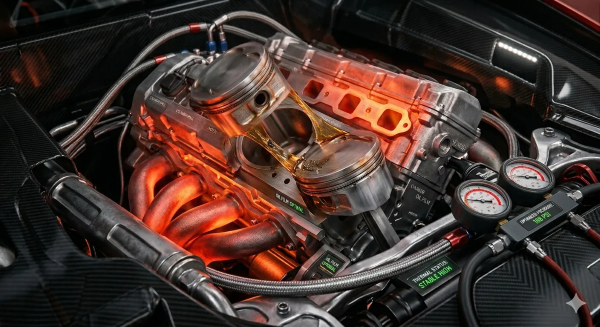
Why Factory Engine Oil Isn't the Ultimate Protection: Unmasking the Hidden Risks Under "High Load"
Many car owners share a common myth: "I bought a top-tier supercar, so the factory oil must be the best," or "My small car is just for commuting; factory oil is more than enough." However, from the physical perspective of engine lubrication, regardless of horsepower, factory oils are facing a severe conflict between environmental regulations and performance protection.
I. The "Castrated" Protective Layer: Sacrificed for Regulations
Modern environmental standards (such as the ACEA C-series) strictly limit the levels of SAPS (Sulfated Ash, Phosphorus, and Sulfur) in engine oil to protect exhaust components like catalytic converters and Gasoline Particulate Filters (GPF).
-
The Critical Missing Link: Phosphorus and Zinc (ZDDP) are currently the most effective and stable extreme-pressure (EP) anti-wear chemical agents known to man. To pass environmental certifications, factory oils must drastically reduce these elements.
-
The Consequence: Engines lose their "final line of chemical defense." When pressure on metal surfaces becomes extreme, the lack of sufficient ZDDP buffering means wear-and-tear begins to occur silently.
II. Defining "High Load": The Real Threat
High load doesn't necessarily mean high-speed racing; it refers to moments when the engine is "working under extreme strain." This is when combustion chamber pressure peaks and the oil is tested most severely:
-
The Supercar Limit: High RPMs generate massive shear forces that attempt to "snap" the molecular chains of the oil, leading to an instantaneous collapse of protective capacity.
-
The Small Car Struggle: Small-displacement engines often face the "small horse pulling a heavy carriage" scenario. Whether it's climbing hills fully loaded, aggressive overtaking, or running the AC in mid-summer, the engine must maintain high output for long periods. For small cars, this sustained thermal accumulation can be even more damaging to the oil than the occasional burst in a supercar.
III. Three Blind Spots of Factory Oil Under High Load
1. Loss of Physical Compression (Engine "Going Soft")
To chase better fuel economy figures, factory oils have trended toward "low viscosity." However, under high load, an overly thin oil film struggles to maintain a perfect physical seal.
-
The Feedback: Combustion pressure leaks through the piston ring gaps (Blow-by), making the power delivery feel "hollow and weak." You’ll hear the engine roaring, but the actual thrust feels disconnected and thin.
2. Risks Triggered by Thermal Accumulation
Cases of supercars catching fire are often linked to insufficient oil protection. When oil loses its sealing ability under extreme heat, high-temperature oil vapors are forced into the crankcase. If pressure builds up and vents onto a glowing-hot exhaust manifold, it can easily ignite. For small cars, inadequate heat dissipation leads to rapid degradation and leaking of oil seals.
3. Compromises in Refinement and Longevity
The core design philosophy of factory oil is "no failures during the warranty period," not "peak operating refinement." This is the hidden reason why many new cars start sounding rougher and vibrating more before they even hit 30,000 kilometers.
How to Restore the "Power Buffer"?
Since factory oils must compromise for regulations, seasoned enthusiasts (from supercar owners to small-car experts) seek to restore protection through external reinforcement:
-
Replenish Extreme-Pressure Elements: By adding high-quality ZDDP or Organic Molybdenum, you restore the chemical barrier removed by regulations, ensuring metal-on-metal contact doesn't occur under high-pressure squeezing.
-
Strengthen Physical Sealing: Utilizing technology that enhances oil film tenacity creates a "power seal" between the piston rings and cylinder walls. This settles the engine note into a deep, solid hum and restores a full, direct throttle response.
Factory engine oil is the "legal answer" in a suit and tie, but it isn't necessarily the "optimal answer" for engine health. In the real world of high heat, high pressure, and high load, supplementing those missing physical and chemical defenses is the true key to maintaining peak engine performance.
The Expert’s View: Protection doesn't care about horsepower. Supercars need it to prevent fires; small cars need it to survive the daily grind. Only when an engine is in a state of "solid compression" is the explosion of every drop of fuel truly utilized.