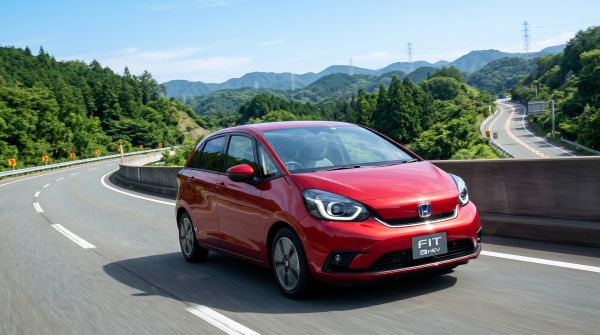
Many drivers of the Honda Fit e:HEV (and other series-parallel dual-motor hybrid systems) have experienced a nerve-wracking scenario when tackling long, steep climbs like Taiwan's Cingjing, Hehuanshan, Alishan, or the Linkou slope on National Highway 1: as the high-voltage traction battery drains, the state-of-charge (SoC) indicator drops to its final two bars. Instantly, the vehicle falls into what feels like a limp or protective mode—the internal combustion engine revs frantically up to 4,000–5,000 RPM, filling the cabin with a dry, strained mechanical roar. Yet, even with the accelerator pinned to the firewall, the car crawls along at a sluggish 40–50 km/h.
Most people write this off by claiming that "hybrids simply aren't built for mountain climbing" or that "the battery pack is just too small." However, examining the vehicle's powertrain control logic, energy conversion chain, and the mechanical limits of internal combustion chamber sealing reveals the root cause: it is not insufficient battery capacity, but rather the total breakdown of the engine's work output under extreme high-load power generation.
1. The Energy Cliff at Two Bars: Why Most Hybrids Fall Flat
In Honda's e:HEV architecture, low-to-medium speeds and most uphill ascents rely entirely on the traction motor (delivering peak torque of up to 25.8 kgm / 253 Nm) to drive the wheels. The energy balance governing the traction motor is:
Total Motor Drive Power = Battery Discharge Power + Instantaneous Engine-Driven Generator Output
Battery Protection Threshold Triggered: Discharge Plummets to Near Zero
When the traction battery SoC falls to approximately 20%–25% (represented by the bottom two bars on the cluster), the Power Control Unit (PCU) strictly caps or shuts off battery discharge current to prevent over-discharge, irreversible cell polarization, or premature battery degradation.
At this point, the battery discharge power in the equation collapses close to zero. Consequently, to sustain the torque required to push a 1.2-ton vehicle against gravity, 100% of the electrical energy must be generated on the fly by the engine driving the generator.
The Triple Physical Failure at the Generation Stage
Under this extreme series-generation load, an unoptimized powertrain typically suffers three compounding blows:
-
High Compression Ratio Meets Knock-Induced Ignition Retard: The Fit e:HEV features a 1.5L Atkinson-cycle engine with an ultra-high geometric compression ratio of 13.5:1. When the generator runs at full load, the engine experiences severe thermal and mechanical stress. Using standard 95-octane fuel causes end-gas knock. The ECU detects this within milliseconds and retards ignition timing away from the optimal torque angle, slashing the effective expansion work per combustion cycle.
-
Microscopic Blow-By Pressure Loss: Imperfect sealing between the piston rings and cylinder walls allows peak combustion pressures exceeding 100 bar to escape into the crankcase. This microscopic blow-by directly saps the downward force acting on the piston crown.
-
Mechanical Loss Dries Up Generating Current: Because the engine's effective crankshaft torque plummets, the generator cannot extract sufficient rotational force, causing generating amperage to collapse. Starved of current, the traction motor's output torque is cut drastically—the true cause of the dreaded uphill bog.
2. Turning the Tide: Sealing Geometry Combined with Chemical Anti-Knock
Resolving power fade when the battery is depleted does not require a bulky auxiliary battery pack. Instead, the solution lies at the source: ensuring the combustion engine delivers 100% of its rated thermal efficiency and mechanical work under peak load.
Pure 98-Octane Fuel: Defending the 13.5:1 Timing Peak
The primary benefit of high-octane fuel is not higher energy density, but chemical stability against auto-ignition. The knock resistance of pure 98 octane provides a robust barrier for the 13.5:1 Atkinson-cycle compression ratio. Under the scorching temperatures and pressures of continuous generator duty, the ECU can push ignition timing into the optimal torque window, fully extracting power from every droplet of atomized fuel right past top dead center (TDC).
ZEP Zinc Sealing Agent: Locking Down Combustion Chamber Micro-Leaks
Advancing ignition timing yields little benefit if combustion pressure leaks past the boundaries. By microscopically filling micro-grooves and wear tracks between the piston rings and cylinder walls, mechanical blow-by drops toward zero ($\text{Blow-by} \approx 0$).
-
Maximized Downward Force: Peak explosive cylinder pressure is retained entirely atop the piston, transferring maximum torque to the crankshaft.
-
Thermal Protection for Engine Oil: Preventing blow-by gases from entering the crankcase stops premature breakdown of the oil film, preserving kinematic viscosity and preventing high-temperature degradation across the powertrain.
3. Closing the Chain: From Cylinder Pressure to Full 25.8 kgm Wheel Output
With restored mechanical gas-tightness and robust anti-knock chemistry in place, the power generation chain under sustained steep climbing transforms:
[ Extreme High-Load Generation Chain ]

Combustion Stage                   Generator Stage                  Drive Wheels
[ 13.5:1 Ratio + 98 Octane Peak Timing ]
[ + ZEP Micro-Seal (Blow-by ≈ 0)       ] ➔ Crankshaft Torque ➔ Generator Amperage ➔ Traction Motor 25.8 kgm
                                                                                        └─► Steady Uphill Pull!
When the traction battery steps back, the engine ceases to be a noisy, hollow machine revving in vain; it becomes an efficient, steady-state power station. Fed with mechanical energy from the crankshaft, the generator supplies a high, consistent current directly to the traction motor.
Even with the cluster reading two bars, the traction motor delivers its full 25.8 kgm of push on demand—climbing steadily with quiet composure and firm acceleration over the crest.
Hybrid performance is an energy relay race: Chemical Energy $\rightarrow$ Mechanical Energy $\rightarrow$ Electrical Energy $\rightarrow$ Mechanical Energy. When the battery reservoir runs low, vehicle output depends entirely on the efficiency of the internal combustion engine. Preserving optimal timing with 98-octane fuel and sealing cylinder leaks ensures combustion energy reaches the generator without compromise. Even in an electrified hybrid, fundamental thermodynamics and mechanical sealing remain the deciding factors under demanding conditions.